
“The next day he had almost forgotten about Gandalf. He did not remember things very well, unless he put them down on his Engagement Tablet: like this: Gandalf Tea Wednesday.”
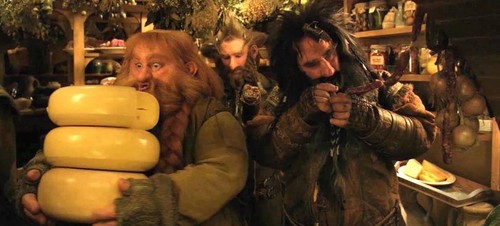
It is one of the most famous tea parties in all literature, if not the most famous. It is, at least, to all fans of hobbits and wizards and Tolkien himself. It was quite an unexpected one for Bilbo Baggins, who thought he was entertaining a wizard and found himself feeding a hobbit hole full of unruly dwarves.
And while he wasn’t quite sure how he’d managed to get himself into the former, he was thoroughly flummoxed by the latter.
Even if he wasn’t as forgetful as he was, or had anticipated Gandalf’s machinations, Bilbo still would have struggled with putting on a tea party for these two disparate groups of guests, and to understand why, we have to understand the difference between high tea and low tea.
First of all, in modern parlance (particularly in America), high tea sounds quite fancy and desirable. Low tea sounds less so. We often say we are going to high tea when we’re going to afternoon tea because we want to impress our friends. But in Bilbo’s world (and the Victorian English countryside upon which it was based) it was quite the opposite and wouldn’t have impressed them at all.
Low tea was the fancy afternoon repast we have in mind: small sandwiches, scones and fancy cakes, often served at a low table in the drawing room. This was the afternoon tea of the gentry and nobility, who had later dinner hours and more free time during the day.
High tea was actually a working man’s meal served at a higher dining table at the end of the day’s toils. Not only was tea served “strong enough to trot a mouse on”, as the saying goes, but so was more substantial food: meats, cheeses, breads, soups and much hardy fare.
(In many parts of England now, this tradition lives on with “supper” bring referred to as “tea.”)
For Bilbo, he clearly thought he was preparing a low tea for an important – if somewhat worrisome – guest. A wizard, no less. He found himself, instead, throwing together a high tea for working dwarves.
This is clear in the types of foods he provided: not only tea and cakes and apple tart, but beer, cold chicken, eggs, pickles, salad and more good, plain food.
So, remember, when you’re entertaining important Wizards (no matter how meddlesome), provide a proper low tea with cakes. But when you have dwarves to feed unexpectedly, nothing but a filling high tea will do.
 Tea with Bilbo